FIND THE LAVIN RANT UPDATES HERE:
http://thelavinrant.tumblr.com/

Monday, December 19, 2011

Top 25 Tracks of 2011: Part 4
10. St. Vincent - "Surgeon"

"Surgeon" is a woozy highlight of the tremendous Strange Mercy. With Annie Clark's axiomatic vocals and the plain surprising synthesizer jam-out outro, "Surgeon" is a new outlook into Clark's future with the St. Vincent sound and it's exciting to see what she'll do next.
9. Battles - "Ice Cream (Ft. Matias Aguayo)"

"Ice Cream" is an excellent cross point between Battles' pop-oriented math rock, humorous musicianship, and off-the-wall instrumentation. The inclusion of Aguayo's quirky vocals makes "Ice Cream" the best Battles tune and an excellent direction for Battles to take in the future rather than delving into more crafty math rock.
8. Fleet Foxes - "Helplessness Blues"

Exploding onto the scene in 2008, Helplessness Blues was easily the most anticipated release in 2011 and the leading single "Helplessness Blues" was an easy gateway into what Helplessness Blues might be about. With the soaring vocals and cheerful instrumentation. The moment they break out into the "If I had an orchard I'd work until I was sore!" points towards another addicting Fleet Foxes tunes.
7. Wilco - "I Might"

The first thing about "I Might" from Wilco is that is goes back to Wilco's roots of quirky musicianship and excellent qualities that Wilco has, or had... "I Might" is that bright output Wilco put out on The Whole Love, but unfortunately the rest of the album doesn't have that "kick."
6. Tyler the Creator - "Sandwitches (Ft. Hodgy Beats)"

With Odd Future being the most quotable bunch of 2011, you can find about ten of those quotes on "Sandwitches" that are just to obscene to be said on here. "Sandwitches" exemplifies Tyler's ability to create off-the-wall beats and awesome samples over simply hilarious rapping, it's some of the best hip-hop of 2011.

"Surgeon" is a woozy highlight of the tremendous Strange Mercy. With Annie Clark's axiomatic vocals and the plain surprising synthesizer jam-out outro, "Surgeon" is a new outlook into Clark's future with the St. Vincent sound and it's exciting to see what she'll do next.
9. Battles - "Ice Cream (Ft. Matias Aguayo)"

"Ice Cream" is an excellent cross point between Battles' pop-oriented math rock, humorous musicianship, and off-the-wall instrumentation. The inclusion of Aguayo's quirky vocals makes "Ice Cream" the best Battles tune and an excellent direction for Battles to take in the future rather than delving into more crafty math rock.
8. Fleet Foxes - "Helplessness Blues"

Exploding onto the scene in 2008, Helplessness Blues was easily the most anticipated release in 2011 and the leading single "Helplessness Blues" was an easy gateway into what Helplessness Blues might be about. With the soaring vocals and cheerful instrumentation. The moment they break out into the "If I had an orchard I'd work until I was sore!" points towards another addicting Fleet Foxes tunes.
7. Wilco - "I Might"

The first thing about "I Might" from Wilco is that is goes back to Wilco's roots of quirky musicianship and excellent qualities that Wilco has, or had... "I Might" is that bright output Wilco put out on The Whole Love, but unfortunately the rest of the album doesn't have that "kick."
6. Tyler the Creator - "Sandwitches (Ft. Hodgy Beats)"

With Odd Future being the most quotable bunch of 2011, you can find about ten of those quotes on "Sandwitches" that are just to obscene to be said on here. "Sandwitches" exemplifies Tyler's ability to create off-the-wall beats and awesome samples over simply hilarious rapping, it's some of the best hip-hop of 2011.
Sunday, December 18, 2011
Top 25 Tracks of 2011: Part 3
15. Destroyer - "Kaputt"

As cheesy as Destroyer lead man Daniel Bejar is; he's got sangfroid. "Kaputt" has this uncanny ability to sound dancey, sophisticated, jazzy, and on top of all that sensual. This is sophisti-pop at its best with eerie trumpet outbursts, a disco-esque beat, and the silky smooth vocals of Bejar.
14. WU LYF - "We Bros"

As abrasive as WU LYF's lead singer Elley Roberts voice is, he has some tenacity to just straight out yell into the mic on "We Bros." The rest of WU LYF fill the space with bombastic drums, post-rock-like guitars, and a very heavy organ. "We Bros" is the defining track for WU LYF on Go Tell Fire To the Mountain and a future directive for WU LYF to see itself in the future.
13. PJ Harvey - "The Glorious Land"

PJ Harvey made a tremendous comeback in 2011. Let England Shake is full of post-war anthems and "The Glorious Land" is a catchy one; as Harvey wails, "what is the glorious fruit of our land?" ominous bugles call out and excellent harpsichord work is done by Harvey.
12. Girls - "Honey Bunny"

"Momma, she really loved me," croons Christopher Owens, Girls lead man, on the fast paced and bitter surfy-punk rocker "Honey Bunny." The genre-skipping Owens does is tremendous and "Honey Bunny" is a mixture of punk, surf-rock, and '50s-esque jangle pop, it's all fun.
11. Radiohead - "Lotus Flower"

When Radiohead released one of their arguably best music videos for "Lotus Flower", Thom Yorke was the face of all new internet memes, critic evaluations, Youtube remixes, etc. One thing is undisputed about "Lotus Flower" it's unique. It's that one song you fall in love with on a Radiohead LP, it's that "Paranoid Android" or "Nude", it's quintessentially monumental, unfortunately The King of Limbs couldn't have been as era-defining.

As cheesy as Destroyer lead man Daniel Bejar is; he's got sangfroid. "Kaputt" has this uncanny ability to sound dancey, sophisticated, jazzy, and on top of all that sensual. This is sophisti-pop at its best with eerie trumpet outbursts, a disco-esque beat, and the silky smooth vocals of Bejar.
14. WU LYF - "We Bros"

As abrasive as WU LYF's lead singer Elley Roberts voice is, he has some tenacity to just straight out yell into the mic on "We Bros." The rest of WU LYF fill the space with bombastic drums, post-rock-like guitars, and a very heavy organ. "We Bros" is the defining track for WU LYF on Go Tell Fire To the Mountain and a future directive for WU LYF to see itself in the future.
13. PJ Harvey - "The Glorious Land"

PJ Harvey made a tremendous comeback in 2011. Let England Shake is full of post-war anthems and "The Glorious Land" is a catchy one; as Harvey wails, "what is the glorious fruit of our land?" ominous bugles call out and excellent harpsichord work is done by Harvey.
12. Girls - "Honey Bunny"

"Momma, she really loved me," croons Christopher Owens, Girls lead man, on the fast paced and bitter surfy-punk rocker "Honey Bunny." The genre-skipping Owens does is tremendous and "Honey Bunny" is a mixture of punk, surf-rock, and '50s-esque jangle pop, it's all fun.
11. Radiohead - "Lotus Flower"

When Radiohead released one of their arguably best music videos for "Lotus Flower", Thom Yorke was the face of all new internet memes, critic evaluations, Youtube remixes, etc. One thing is undisputed about "Lotus Flower" it's unique. It's that one song you fall in love with on a Radiohead LP, it's that "Paranoid Android" or "Nude", it's quintessentially monumental, unfortunately The King of Limbs couldn't have been as era-defining.
Friday, December 16, 2011
Top 25 Tracks of 2011: Part 2
20. Real Estate - "It's Real"

Hooks make music attract to the human ear and Real Estate's "It's Real" is jam-packed full of them. From the easy singalong chorus of "Ohhh! It's real!" to the steady guitar strums underneath layers of indie pop brilliance. It's simple, it's effective, it's real.
19. The Strokes - "Under Cover of Darkness"

"Under Cover of Darkness" is like a mixture of The Strokes from Is This It to First Impressions of Earth. It has both simplicity and progression that spawns from all of The Strokes' discography. Unfortunately, the rest of Angles couldn't have been as satisfying.
18. The Antlers - "I Don't Want Love"

"You wanna climb up the stairs/I wanna push you back down," croons The Antlers' lead singer Peter Silberman on the opening lines of the bitter sweet slowcore ballad "I Don't Want Love." As an opener to Burst Apart, it works tremendously as a glimpse into The Antlers' new approach into deeply emotional, yet pop-oriented music.
17. Smith Westerns - "Weekend"
The aesthetic of Smith Westerns' "Weekend" is full of glam rock guitar, power pop choruses, and some very make shift vocals. As it is appropriately titled "Weekend", it is a perfect entry song into endeavors that are explored on weekends around the world.
16. M83 - "Midnight City"

2011 was a comeback year for M83, and "Midnight City" was that single that reminded the world of M83's presence. Set up as a synth pop ballad "Midnight City" exemplifies the high points of chillwave-esque tunes dominating the music scene in 2011.

Hooks make music attract to the human ear and Real Estate's "It's Real" is jam-packed full of them. From the easy singalong chorus of "Ohhh! It's real!" to the steady guitar strums underneath layers of indie pop brilliance. It's simple, it's effective, it's real.
19. The Strokes - "Under Cover of Darkness"

"Under Cover of Darkness" is like a mixture of The Strokes from Is This It to First Impressions of Earth. It has both simplicity and progression that spawns from all of The Strokes' discography. Unfortunately, the rest of Angles couldn't have been as satisfying.
18. The Antlers - "I Don't Want Love"

"You wanna climb up the stairs/I wanna push you back down," croons The Antlers' lead singer Peter Silberman on the opening lines of the bitter sweet slowcore ballad "I Don't Want Love." As an opener to Burst Apart, it works tremendously as a glimpse into The Antlers' new approach into deeply emotional, yet pop-oriented music.
17. Smith Westerns - "Weekend"

The aesthetic of Smith Westerns' "Weekend" is full of glam rock guitar, power pop choruses, and some very make shift vocals. As it is appropriately titled "Weekend", it is a perfect entry song into endeavors that are explored on weekends around the world.
16. M83 - "Midnight City"

2011 was a comeback year for M83, and "Midnight City" was that single that reminded the world of M83's presence. Set up as a synth pop ballad "Midnight City" exemplifies the high points of chillwave-esque tunes dominating the music scene in 2011.
Thursday, December 15, 2011
Top 25 Tracks of 2011: Part 1
25. Wild Beasts - "Albatross"

"Drown in me," a morbid line for Wild Beasts' leading single off Smother. "Albatross" works off itself through subtly and emotionally moving releases with an untouchable piano interlude that sets the entire stage for Smother to work.
24. Cults - "Do You Know What I Mean"

Cults' heavily melodic indie pop is perfectly showcased on the short and sweet "Do You Know I Mean", lead singer Madeline Follin's voice climaxes intricately with a bouncy waltz beat.
23. Washed Out - "Eyes Be Closed"

If you ever wanted to listen to a soundtrack of a plane taking off into a sunset - here it is. "Eyes Be Closed" is a definite chillwave classic, and with a year full of chillwave, "Eyes Be Closed" takes the prize as being one of the most well thought out tracks of 2011.
22. tUnE-yArDs - "Bizness"

Merrill Garbus's jumpy jam "Bizness" moves around in all directions, but stays consistently brilliant throughout. Garbus's instrumentation is pure fun with saxes, guitars, horns, and even using her own voice as an instrument.
21. Cut Copy - "Need You Now"

Australian synth pop masters know how to make a dancey tune that has replay value and longevity. Though the entire theme of "Need You Now" is so cheesy and cliche, it plays off that intention and creates an all out fun-filled dancey journey.

"Drown in me," a morbid line for Wild Beasts' leading single off Smother. "Albatross" works off itself through subtly and emotionally moving releases with an untouchable piano interlude that sets the entire stage for Smother to work.
24. Cults - "Do You Know What I Mean"

Cults' heavily melodic indie pop is perfectly showcased on the short and sweet "Do You Know I Mean", lead singer Madeline Follin's voice climaxes intricately with a bouncy waltz beat.
23. Washed Out - "Eyes Be Closed"

If you ever wanted to listen to a soundtrack of a plane taking off into a sunset - here it is. "Eyes Be Closed" is a definite chillwave classic, and with a year full of chillwave, "Eyes Be Closed" takes the prize as being one of the most well thought out tracks of 2011.
22. tUnE-yArDs - "Bizness"

Merrill Garbus's jumpy jam "Bizness" moves around in all directions, but stays consistently brilliant throughout. Garbus's instrumentation is pure fun with saxes, guitars, horns, and even using her own voice as an instrument.
21. Cut Copy - "Need You Now"

Australian synth pop masters know how to make a dancey tune that has replay value and longevity. Though the entire theme of "Need You Now" is so cheesy and cliche, it plays off that intention and creates an all out fun-filled dancey journey.
Friday, December 9, 2011
The Black Keys - El Camino [Nonesuch]

7.7
Amidst the avant-garde jazz (Matana Roberts), artistic future garage (James Blake), and a soundtrack to the nostalgia-filled 2011 (Girls), there lies The Black Keys. No band brings back the hard-hitting bluesy garage rock like The Black Keys. Last year’s Brothers really showed The Black Keys can create borderline-raw yet definite and hook-filled rock that really just sounds great. The group’s seventh studio work El Camino is no different. The Black Keys’ multi-instrumentalist Dan Auerbach stated he wanted to follow the lines of Brothers with El Camino, smart move as El Camino is easily one of the most fun, easy-listening albums of 2011.
With production from the up-and-coming Danger Mouse, El Camino is one of The Black Keys’ most clear-cut, indie rock-esque releases to date. Adding elements of not just the traditional garage rocks the Keys have been working through since 2001, but topping off the more upbeat Brothers with simply hard traditionally set rock and roll. Using jangly bells on “Dead and Gone”, surprising acoustic guitar ventures on the front half of “Little Black Submarines”, and even soulful gospel flavored chord progressions on “Stop Stop”; The Black Keys find a nice groove with Danger Mouse and their pure talent at simply making very accessible music.
In a lot of the ways The Black Keys are incredibly smart. Sorting through so many different genre infusions throughout their career and eventually coming to Brothers which finds a nice medium between the hard bluesy garage rock and pop-oriented flavors. Even down to the packaging, Brothers actually won a Grammy last year for it, The Black Keys know how to coordinate themselves to stand out from the rock revivalists of the ‘00s. The early ‘00s were dominated by The White Stripes and The Strokes in the whole hard rock revivalism scene, but the late ‘00s and early ‘10s belongs to The Black Keys easily.
El Camino finds itself as one of 2011’s most conventionally appealing albums. All the songs find themselves as easy sing alongs you blast in your car and really just simply jam out to. You’re not going to find the most compelling or emotionally moving music on El Camino, but when it comes to The Black Keys, who really needs that? The mixture of Danger Mouse and The Black Keys is a smart and enticing one that has really hit off well for both parties and is exciting to see what both can do in the future.
Saturday, November 26, 2011
Oneohtrix Point Never - Replica [Mexican Summer/Software]

8.4
Finding a median between ambience, glitch, and even minimalism is a sheer monumental accomplishment in itself. But, I’m sure Daniel Lopatin, aka Oneohtrix Point Never, prides himself on simply sounding like nothing else. The atmospheric, awkward synthesizers that penetrate the breaks of being beautiful are simply astounding on Replica, Lopatin’s second widely distributed LP following last year’s break-out Returnal. One could simply call this music “drone”, but I think it’s deeper than that. Its permeation into the minds of listeners is astounding. How can you even describe what is going on Lopatin’s complex loop-filled music?
Replica is in fact unlike anything I’ve heard. Though my drone music knowledge is very limited; I feel as though Lopatin has crafted something unreal and so nostalgic, it’s indescribable. Scenes of black and white cottages surrounded by something sinister at dawn is conjured on “Andro” and “Power of Persuasion”; in fact, the entirety of Replica is like an impending doom threatening to swoop in. The drone-like ambience is where Lopatin really hits his stride with near perfection. ”Andro” is an epic piece of music until the drill and bass sequence thunders in towards the end.
When I mentioned the sounds of Replica are awkward, I mean it. The main beat of “Nassau” sounds like the fast inhaling and exhaling of a man and the piercing percussion on “Remember” is just cringingly abrasive. Fortunately, the more ambiences Lopatin inserts, the better Replica gets. “Nassau” really picks up at the end with indiscernible nostalgia creeping in with soaring doodling synths. “Submersible” is really a main highlight being the most ambient and eerie track on Replica, but it still has this unmistakable beauty about it; it sounds so old and aged, yet nothing like it has been created before.
The most structured of the tracks off Replica is the daunting title track. Trudging through with a slow and somber piano line accompanied by heavily reverb instrumentals darting around and around the piano line; “Replica” is a track to remember for 2011 and most likely the entire decade to come for music. The entirety of Replica will be look back as a monumental record to propel Lopatin into the realms of the great modern electronic artists such as Aphex Twin, Tim Hecker, and others, but Lopatin will be something more.
Replica is purely introspective and requires multiple listens to really appreciate its textures. From glitch, ambience, and even slowcore; Lopatin reaches limits in music unknown to man but still finds a way to brings us back to a familiar place where we can delve into something from the past. Turn off your lights, turn on a soft fan, make sure it’s a chilly late-autumn day and pop in Oneohtrix Point Never’s Replica and find yourself in an up-and-coming electronic artist’s soundscapes.
Sunday, November 20, 2011
Sigur Rós - Inni [Krunk]
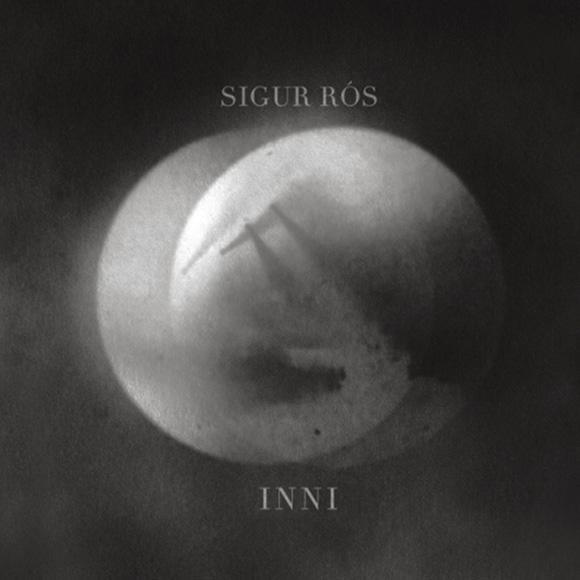
8.5
Iceland has two things that always have beautified its image: the lush, beautiful landscape and Sigur Rós. With the release of their dual CD live album, Inni, Sigur Rós, once again, put themselves on the top of the ladder with tremendous versatility. Recorded and filmed at Alexandra Palace in London back in 2008 on the tour from their last LP Með suð í eyrum við spilum endalaust, Inni is moreover a compilation of Sigur Rós’s greatest compositions ranging from all of their most prominent LPs including: Ágætis byrjun, (_), Takk…, and Með suð í eyrum við spilum endalaust. The performance Sigur Rós is as compelling as ever and revamp’s their placement in the post-rock spectrum that is suffering.
As “Glósóli” hits its climax of lead singer Jónsi’s pitch-perfect wails and static guitar bursts, you can simply just feel the energy the to Sigur Rós’s music would take paragraphs and paragraphs of explicit detail to truly excavate Sigur Rós’s sound. So I’ll simply lay it out like this: Inni is a Sigur Rós fan must-have while being a beginner’s manual Icelandic quartet is known for. Jónsi shows his stamina when he holds an ethereal note for literally 50 seconds with no breath on the epic “Festival”. The continuation of laying out all these beautiful elements and layers.
Inni explores all aspect of Sigur Rós; the minimalistic, ethereal landscapes (“Svefn-g-englar”), cinematic epics (“Festival”), and even the jumpy, less emotionally draining (“Inní mér syngur vitleysingur”). This variety is well put together through appropriate track ordering which jump around the entire Sigur Rós discography. The recording simply is breathtakingly clear as well, you get full Sigur Rós effect with humanized elements of a live performance along with the sheer joy of hearing the monumental sounds Sigur Rós creates.
Not much else can really be said about Inni. The overwhelming force that Inni still confines to while keeping minimal qualities is simply astounding. The purchase of Inni also comes with a DVD along with the dual CD of music, the main attractions and climaxes of the album are highlighted through the film’s purposeful camera angles and simply capturing the pure emotion of Sigur Rós and the atmosphere during the performance. Being an intro to Sigur Rós and an ultimate collector’s idea for diehard fans; Inni is one of the best live albums to be ever released. Now just throw us a studio album, Sigur Rós.
Saturday, November 12, 2011
Real Estate - Days [Domino]

8.3
In the United States, autumn officially begins on September 22, thus signifying the end of summer. This is significant due to the fact that Real Estate’s second LP Days was released October, 17, 2011 which isn’t in the summer. Days is your sunny, glorious summer album. The breezy guitar lines, shoegaze overtones, and the murky vocals all point towards a clean and cut summer record to listen to while taking shoreline drives. Though the fact that Real Estate didn’t release Days in the summer signifies a sort of farewell to the summer’s trials and memories; Days is a superb record that blows their self-titled debut out of the water.
The surprisingly lengthy finale “All the Same” has this absolutely glowing vibe of a sunset on a great, memorable day; steadily slowing down and eventually reaching the very satisfying conclusion of calm. Days, in fact, spins like a day at the beach or something else equally enjoyable with first track “Easy” being the start of the day and glorious expectations of the day. “Dreams we saw with eyes of hope/Until that dream was done,” croons lead singer Martin Courtney with a hazy echo on “Easy” has such a hook to it, it’s virtually impossible to even think about disliking it.
By no means is Days an eerie record, but some of the beautiful chords the guitars bring together can create such dissonance. Although Days is an excellent, nostalgic album, there is still a lack of song writing ability to really enhance overall tenacity of the album. Each track follows a very, very simple song structure that you can get with any pop artist, but the material Real Estate crafts is good enough to exceed these disappointing elements. Teen Dream from Beach House early in 2010 had the same problem; really beautiful substance with really no groundbreaking structure. Naturally, pop music appeals to the majority of human ears, so the Real Estate is a very accessible and a pleasant listen. You can simply call Days a successful “indie” pop record.
Days is that album you listen to when you want to have a good day, you really can’t go wrong with the material Real Estate crafts to formulate a nostalgic, pop-oriented record. Hooks and hooks really make Days fly by with such a appealing nature; you can’t help but just smile as the piano enters in on the chorus of “Municipality” and the “oohhhs” of Real Estate band members on “It’s Real”, it’s all great listening. Who really cares if this is released in autumn? Days will be playing throughout the entirety of winter.
Wednesday, October 26, 2011
Coldplay - Mylo Xyloto [Parlophone]

4.4
One thing that was so prominent with Coldplay’s 2008 effort Viva La Vida or Death and All His Friends was the ambiguity of it. Tracks like “42” and “Death and All His Friends” made Viva La Vida one of my cherished albums that lived up to all the hype. As my music tastes and preferences changed rapidly from 2008 to 2011, Coldplay was left in the dust and I ashamedly found myself barely even caring that Coldplay’s fifth LP Mylo Xyloto was being released within a couple of days. Leading single “Every Teardrop Is a Waterfall” possibly signified the ultimate deciding factor of whether Mylo Xyloto had any hope to be as transcendent as Viva La Vida was. It failed, quite miserably.
Taking the opposite direction that Viva La Vida was dropped out with (the darker and more textured feel) Mylo Xyloto is more colorful and less brooding than its predecessor. One thing immediately present through just a simple listen of Mylo Xyloto is the lack of transition between songs. All past Coldplay efforts have had a consistent theme and dynamic to fall back on; A Rush of Blood To the Head—that glorious piano rock that skyrocketed Coldplay to fame; X&Y—spacey electronics; Viva La Vida—the beautifully orchestrated and baroque-quality music. However, Mylo Xyloto jumps around into random intervals. From the hushed acoustic guitar backed with lush orchestrations on “U.F.O.” to the Rihanna featured “Princess of China” which sounds like a pop song; the two are even right next to each other, I even checked if my iTunes was on shuffle when “Princess of China” started.
The traditional piano rock A Rush of Blood to the Head and Parachutes are known for is all but nonexistent on Mylo Xyloto; immediately dismissing past fans and bringing in new ones. The comparisons to U2 have been raining down for months ahead of Mylo Xyloto’s release; the pairing isn’t hard to see. The guitar lines on “Every Teardrop Is a Waterfall” are laced with the Edge’s influence and even Coldplay lead man Chris Martin’s croons have changed from the uniqueness on Coldplay’s earlier work into the way Bono wails. I can make endless comparisons, but it’s simple: Coldplay has lost its spunk and possibly run out of ideas.
Finding a standout on Mylo Xyloto is difficult; there isn’t one. Absolutely nothing pops out and has those beautiful “Coldplay moments” that Viva La Vida was laced with. The most flabbergasting part about the whole album is that Chris Martin claims it’s a concept album. Most of the time, concept albums are easy to spot after a listen, and after numerous listens, I still can’t see the whole “Mylo and Xyloto fall in love in a dystopian urban environment”. When tracks cannot even transition effectively, you know you can’t have a concept album with a cohesive structure.
Coldplay has even followed the trend of some pop acts by compressing their songs and adding overly loud bass and bright instrumentation. It’s honestly frustrating to see Coldplay give such a poor effort after the very solid Viva La Vida. Poor production, brutal transitions, and an overall mess of an album with no standouts or impressive moments to back it up, but really, Coldplay fans will never disappoint as a whole, so Coldplay has nothing to worry about.
Wednesday, October 19, 2011
Björk - Biophilia [One Little Indian]

5.5
It’s interesting to sit back and take a look at Icelandic art pop singer Bjork’s album artwork. Each disc features a different image of Bjork in a different way relating to the album; Debut has a youthful, energetic Bjork; Post has a more abstract background with a much more intense Bjork; Vespertine has a swooning, ornate Bjork; and now Bjork’s eighth studio work Biophilia has one of the more avant-garde outlooks of Bjork with her flamboyant orange hair and overall steampunk appearance with cosmic quality. The image describes the album. Unfortunately, Bjork’s erratic and experimental approach to Biophilia falls short of being anything up to her more powerful material (Post, Homogenic).
Reading up on Biophilia is intriguing. It might be one of the first science and technology-based albums to be released. Bjork even teamed up with Apple to create the “world’s first app album” with corresponding apps connecting to each song to tell more about the story surrounding it and along with live performances. The whole idea is a bit overdrawn; it’s an interesting concept, but just not for me. I listen to the music and let the images come to me and let the music wash over me rather then have to mesh with a computer screen and have something trying to tell me what I should interpret a song as.
Musically, Biophilia is shrill, unbalanced and overbearing. Bjork’s vocals are, as always, put front and center with an authority, but this time it doesn’t have that cute Icelandic charm that past efforts have had. The song structures feel inconsistent and too one-sided; “Dark Matter” is exactly what it sounds like with swelling dark, atmospheric ambience with too much bass while “Solstice” is too much of Bjork’s shrill, eerie vocals. The sorts of drill and bass Bjork plays with on the ending of “Crystalline” and the bridges of “Sacrifice” that blast unnecessarily and have this unattractive feel to them.
Looking on the bright side of Biophilia, “Cosmonogy” is a beautiful, soaring ballad that lifts, possibly, the whole album. “Virus” isn’t bad, but the jangly bells persistent on a lot of the album makes their appearance far too often, but Bjork’s vocals performances on “Cosmonogy” and “Virus” make those two tunes the cream of the crop. The instrumentation feels too spacious on some tracks and two mentioned tracks find a nice median between the ambience and swelling instrumentation. Unfortunately, Biophilia’s bad outweighs its good by a landslide.
Disappointment reeks all over Biophilia with months and months of anticipation made out by music websites, but it’s not all bad. There are tracks like “Cosmonogy” and “Virus” that somewhat make up for the mediocrity of “Sacrifice or “Solstice.” Bjork’s long and illustrious career is very inspiring, but possibilities of reaching an end are unfortunately near with the desperation of attempting a new “app album” idea to spawn a new musical direction. The ideas on Biophilia aren’t bad, just very overbearing and not to my tastes.
Wednesday, October 5, 2011
The Field - Looping State of Mind [Kompakt]

8.6
Many think of techno as the loud, thumping music that fills the building with its ridiculous bass and hook-filled synthesizers and other instruments. Few know there is actually a more “artsy” kind of techno, and it isn’t IDM (intelligent dance music), it’s minimal techno. Minimal techno strips down all those raging walls of noise that techno is infamous for and creates spacey, simpler, elaborate techno that is an excuse for anti-techno music fanatics to actually enjoy some beautifully crafted music from Swedish minimal techno mastermind Axel Willner’s, aka The Field, third effort Looping State of Mind.
Looping State of Mind is an ideal title for Willner. The “state of mind” is the loops that Willner near-perfectly crafts through articulate percussive lines that build up and down moving meticulously throughout the seven tracks which clock in for an hour of minimal and ambient techno. The slow-burning goodness of Looping is something that doesn’t come easy; patience and letting the atmosphere and textures sink in is required for a full appreciation of Willner’s orchestrations. Looping isn’t exactly the ideal dance music that techno is coined after. The subtle ways Willner brings his aesthetic to life is uncanny; I see the tracks on Looping as a train rushing by with people jumping on to add onto the personality of the train subtly. Every track starts out with a steady beat that continues throughout the entire tracks, there isn’t any speeding up or slowing down.
Looping music is a curious thing. J Dilla was a master of creating hip-hop instrumentals through simple loops of obscure R&B tunes, but Willner’s loops are unrecognizable and only take a small snippet out of the sample. Opening track “Is This Power” takes a small part of a guitar line and makes it follow the path of a simple techno beat with the occasional instrumentation of a drum and go into a raving journey into a unique soundscape. One of the most enjoyable tunes on Looping is the chugging “Arpeggiated Love,” which builds into a beautiful soaring bell-line that permeates the steady beat. Looping sounds and different elements of music into one aesthetic has never sounded so crisply satisfying.
Even if all the tracks off Looping clock in over seven minutes, they pass by quickly. The minimal appeal Willner puts off is excellent artful music that really changes the image of techno to me. The stereotypical rave music that techno conveys is overshadowed by Willner’s magnificent ability at crafting this wide-open, yet minimalistic music that transcends all of techno’s standards, almost as much as his debut From Here We Go Sublime which was where Willner attempted to find his place and create a daring addition to music, but Looping is in a league of its own where Willner’s maturation comes into place to find his true niche.
Wednesday, September 28, 2011
Wilco - The Whole Love [dBpm]

7.0
What separates Wilco’s earlier releases of Summerteeth and Yankee Hotel Foxtrot from the latest efforts of Sky Blue Sky up to their eighth release The Whole Love? Ingenuity. The blend of alt-country and the raw yet refined experimentations make Wilco easily one of the most exciting indie acts of the early ‘00s. Critics crave another Yankee Hotel Foxtrot, while new fans are added onto with what seems to be every new record with whatever lead man Jeff Tweedy and Wilco throws at them. Honestly, Wilco can really do nothing terribly wrong, but the lack of intensive direction can be a turn off to seasoned Wilco fans.
The Whole Love starts out promising enough with the wild “Art of Almost” that has an eccentric guitar outro that might be one of Wilco’s best guitar works to date, but The Whole Love really drops up and down from there, like the trend that Wilco efforts have been doing since Sky Blue Sky. “I Might” is another definite highlight for The Whole Love and is the signature track on the album like “Wilco (The Song)” was for Wilco (The Album)” and “I Am Trying to Break Your Heart” was for Yankee Hotel Foxtrot.; the killer organ hook that Wilco uses on “I Might” plunges the track into a classic Wilco tune. The rest of the album turns into mediocre alt-country mush that can be easily listened to, but lacks the vigor and approach that the world knows Wilco capable of.
From moody acoustics on “Black Moon” and “Open Mind,” to an electronic country-infused tune, “Capitol City,” The Whole Love is by far not bland in differentiating styles, but again it just sounds too contemporary. Where is the near-experimental approach we were left with on Yankee Hotel Foxtrot, or the charming pop tunes on Summerteeth? Unfortunately, it’s inevitable to believe that Wilco will someday return to some “form” to appease everyone’s taste because honestly Wilco has moved on to a more traditional sound that will attract new comers yet frustrate long-time Wilco fans.
One of the more ambitious moves Wilco attempted was a 12-minute folk track that has great poetic lyricism from Jeff Tweedy with moving lines that precariously drip off one another; “Bless my mind, I miss/Being told how to live.” Those moments are rare on The Whole Love, for there seems to be barrier hiding all the ambition away with uninteresting alt-country tracks like “Open Mind” or “Sunloathe” which are just simply boring and sound so typically Wilco. It is all just so average, nothing pressingly terrible, but nothing excelling.
Wilco again follows the slightly-above mediocrity formula; two to three interesting and engaging tracks with one excellent hit track (“I Might”) and then surrounds those by bogged down tracks that simply don’t transcend to any heights Wilco has reached before. The Whole Love will simply go down as another average LP in Wilco’s discography and will be waved off as purely unimportant and a backdrop to Yankee Hotel Foxtrot’s and couple of other records’ successes. Honestly, any expectation for The Whole Love were killed when Tweedy sings, “I can’t help it if I fall in love with you!” on “Dawned On Me.”
Friday, September 23, 2011
Thundercat - The Golden Age of Apocalypse [Brainfeeder]

8.2
Stephen Bruner, aka Thundercat, is the bassist for hardcore punk band Suicidal Tendencies, but when Bruner is using his nickname, Thundercat, Bruner make music that is completely contradictory to Suicide Tendencies’s bizarre hardcore, thrash metal/punk. The Golden Age of Apocalypse is Thundercat’s debut effort produced under the transcending experimental electronic artist Steven Ellison, aka Flying Lotus. With so much going for Bruner; phenomenal, wide-ranged bass playing from his time with Suicidal Tendencies and his guest work on Flying Lotus’s excellent LP Cosmogramma from last year and the inclusion of Fly Lo’s production, what can possibly go wrong with The Golden Age of Apocalypse?
Digesting The Golden Age of Apocalypse is curious. On the front side you have very catchy and ironically more experimental tracks that really define the high points of Apocalypse, while on the back side of the record, you have more vintage sounding groove tracks that reek of the ‘80s. Though the introspective Cosmogramma is no way an apt comparison to the much different Bruner who crafts more dancey electronic that really grooves. Inevitably though you are going have hints of Fly Lo everyone once in a while; the mixed bag of instrumentation on opener “Daylight” sounds like a brighter, more easily accessible Fly Lo tune, but Bruner adds his own character with futuristic synths soaring in and out. I have an uncanny feeling that the heavily produced songs at the beginning were heavily helped by Fly Lo while the latter tunes are Bruner finding his niche, but I could be completely wrong.
The futuristic jazz fusion Bruner crafts throughout Apocalypse is just purely shallow satisfaction with every drop of noise. At times it can be that high-driven, bombastic electronica that bursts with noises mostly unsuitable for the ear such as the pounding “Feel Ultra” that has a very flat-out in-your-face effect with its high-soaring synth centerpiece. Fortunately, Apocalypse doesn’t just dwell in that energetic, fast-paced experimental electronica; the slow-burning “For Love I Come” is an excellent rendition of George Duke’s 1975 tune “For Love (I Come)” and really defines Bruner’s internal brilliance as a musician. The dancey and more loud-thumping “Daylight” and “Is It Love” really can be enjoyable, but it’s tunes like “For Love I Come” and the fuzzy “ Return To the Journey” make Bruner “Thundercat”.
The track lengths aren’t rightly placed on an album of so much potential like Apocalypse; it needs more five minute intervals that hold your attention at the perfect standard rather than the two to three minutes that most tracks hold you to. The thoughts at sometimes feel incomplete as well, I feel as though “Mystery Machine (The Golden Age of Apocalypse)” could have been highly set-up as an epicenter that the whole album revolves around prominent, like “The End” is to the The Doors. Rookie, debut mistakes happen, and these are luckily easily fixed, so the sophomore can be even more defining.
With Bruner’s immense possibilities within this reign of “nu-jazz” is exciting. Bruner can easily be a front runner alongside Fly Lo and Gonjasufi. It’s as simple as experience in this case: Fly Lo’s third album was easily his defining work so far in his career after more and more progressively better albums and even Gonjasufi’s last year release, A Sufi and a Killer, gleams potential. Expect Bruner to be picked up by the next level of label: Warp with Fly Lo and Gonjasufi.
Subscribe to:
Posts (Atom)